
The unit failed. Here is what happens next.
 August 27, 2026
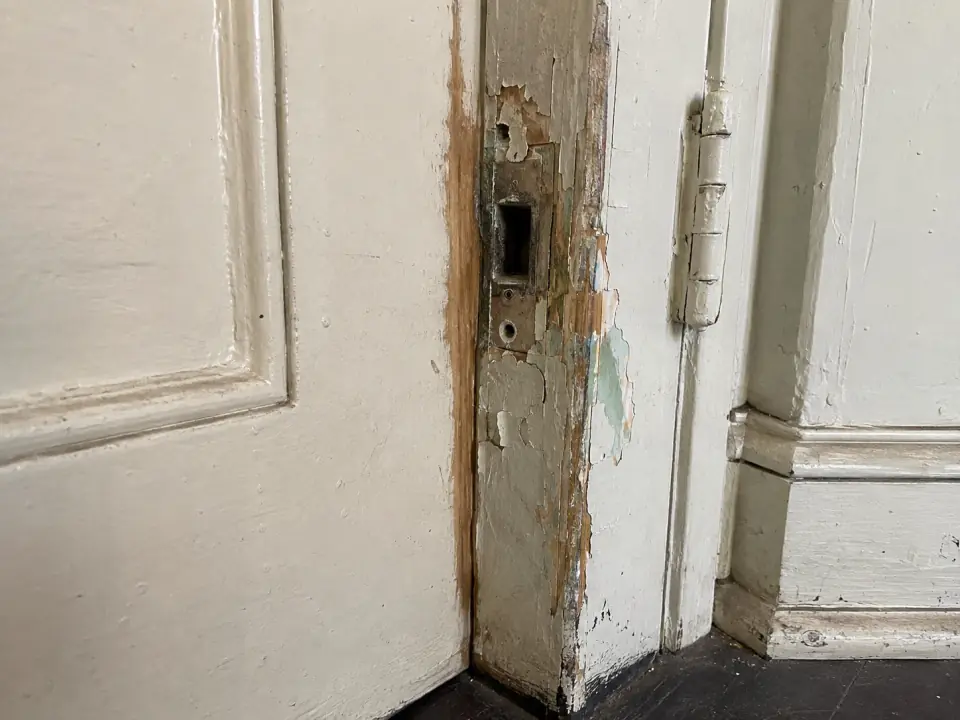
A failed visual inspection means the inspector found deteriorated paint on specific, listed surfaces. It is not a condemnation and not a fine. You fix the listed hazards, pass a re-inspection, and the certificate is issued. Most residential fixes are targeted paint work, not gut remediation.
Your two repair paths
Stabilize the paint: wet-scrape, prime, repaint; clean up dust. Faster and much cheaper. The fix most units need. Has to be maintained; peeling that returns is a new hazard.
Permanent removal: component replacement (new windows, doors, trim), enclosure, or paint removal by a licensed abatement contractor. Costs more, ends the problem on those surfaces for good.
Remediation prices vary too widely to quote responsibly: a few touched-up door jambs and a full window replacement are different projects. Ranges depend on scope; get numbers against the actual inspection report, not in the abstract.
Re-inspection and clearance
Who pays for what
The owner pays for repairs and the re-inspection. Two forms of help exist: New Jersey’s Lead Remediation and Abatement Program (LRAP) offers assistance for qualifying owners, and landlords do qualify: the state program is open to tenants and landlords as long as the occupant's household income is at or below 80% of the area median, the building predates 1978, it has a lead hazard, and it is structurally sound. Vacant units count too. Details and applications live at leadabatement.nj.gov, and some municipalities run their own grant programs; ask your housing office. Tenants never pay for remediation of the landlord’s surfaces.
Failure questions
If you are inside a 30-day notice window, the clock is already running. Without a notice, fix promptly: a documented hazard left open is exactly what draws enforcement.
A failed New Jersey lead inspection does not go on a public list, but the municipality tracks the open case until it is cleared. After a notice of violation you have 30 days to comply, and past that fines run up to $1,000 per week per unit under N.J.S.A. 52:27D-437.19. Remediate, re-inspect, and a closed case with a certificate ends it.
Minor stabilization, generally yes, done properly (wet methods, cleanup). Work disturbing more than 6 square feet of interior painted surface in a pre-1978 building calls for EPA RRP-certified contractors (40 CFR Part 745).
Read us the listed surfaces; we will tell you what the re-inspection needs.